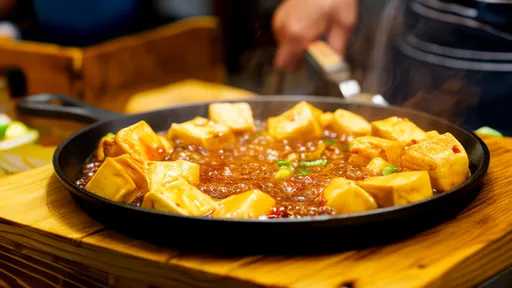
The sizzle of street food stalls is unmistakable—nowhere more so than with the iconic sizzling iron plate tofu, a beloved late-night snack across many Asian night markets. The crispy golden crust giving way to tender, piping-hot tofu is a textural marvel that home cooks often struggle to replicate. While professional chefs wield heavy iron plates over roaring flames, achieving that perfect crisp in a home kitchen requires understanding the science of heat, moisture, and patience.
The foundation lies in selecting the right tofu. Extra-firm varieties with lower water content are non-negotiable; the delicate silken types will disintegrate under high heat. Pressing is crucial—wrapping the block in clean towels and weighting it down for at least 30 minutes forces out excess liquid that would otherwise steam the tofu instead of crisping it. Some veteran street vendors swear by freezing pressed tofu overnight, creating a spongier texture that absorbs marinades better and develops an airier crunch when fried.
Heat management separates adequate home attempts from authentic street-style perfection. Residential stovetops lack the intense BTU output of commercial burners, so preheating becomes critical. A heavy-gauge carbon steel or cast iron skillet should sit undisturbed over medium-high heat for a full five minutes until a water droplet vaporizes instantly. This creates the thermal mass needed for proper Maillard reaction—that complex chemical process responsible for the deep umami flavors and bronze coloration we associate with expertly seared foods.
The oil choice matters more than most realize. Night market vendors typically use blends with high smoke points like rice bran or peanut oil, but refined avocado oil works equally well domestically. What’s often overlooked is oil temperature maintenance; adding tofu cools the pan dramatically. Professionals compensate by working in small batches with ample space between pieces, while home cooks should resist overcrowding and consider briefly removing the pan from heat after adding tofu to let temperatures stabilize.
Surface preparation is where technique diverges from Western frying methods. Instead of dredging in flour or breadcrumbs, traditional iron plate tofu relies on the tofu’s own proteins to form the crust. A thin cornstarch dusting can help, but the magic happens when undisturbed tofu meets properly preheated metal. The initial sear requires absolute patience—resisting the urge to poke or prod for a solid 3-4 minutes allows a crust to properly form. This is where home cooks frequently fail; premature flipping tears the delicate developing crust, leaving a patchy exterior.
Timing the flip demands attention to auditory cues. As moisture evaporates from the tofu’s surface, the sizzle pitch rises from a steady bubble to an almost metallic hiss. This acoustic shift signals ideal crust development. Using a thin metal spatula (plastic tools bend and scrape off the crust), the flip should be decisive yet gentle—think of turning a fragile document rather than flipping a pancake. Some street vendors employ a two-spatula technique for larger pieces, providing support to prevent cracking.
The marinade application timing sparks debate among night market veterans. While some swear by pre-seasoning, others argue salt draws out moisture prematurely. A compromise involves light pre-seasoning with aromatics like grated ginger or garlic powder, then brushing on a reduced sauce during the final minute of cooking. This glaze caramelizes quickly under high heat, mimicking the glossy finish of professional versions. Common street stall sauces combine soy sauce, mirin, and a touch of sugar, reduced to syrup consistency to prevent sogginess.
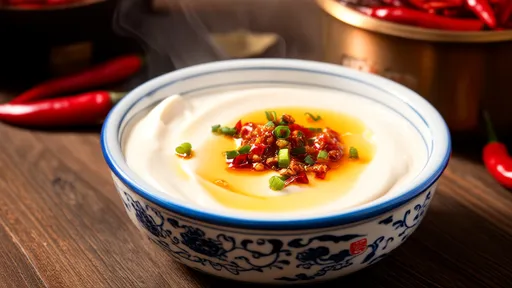
Presentation completes the illusion of street food at home. Professional iron plates retain heat longer than domestic cookware, so serving on preheated stoneware or cast iron keeps the signature sizzle alive longer. Garnishes aren’t merely decorative—finely chopped scallions provide contrasting freshness, while toasted sesame seeds add nuttiness that complements the caramelized crust. A final drizzle of chili oil or sprinkle of Sichuan pepper powder can elevate the dish from nostalgic replication to gourmet interpretation.
Mastering this technique opens doors to other street food adaptations. The same principles apply to achieving the perfect crisp on pan-fried rice cakes or seared dumplings. What begins as an attempt to recreate a specific dish evolves into understanding the physics of heat transfer and surface dehydration—the unspoken fundamentals behind countless sizzling night market favorites. While home kitchens may lack the roaring flames and well-seasoned iron of professional stalls, with careful attention to these details, that elusive combination of shattering crust and cloud-soft interior becomes delightfully achievable.
By /Jul 31, 2025
By /Jul 31, 2025
By /Jul 31, 2025
By /Jul 31, 2025
By /Jul 31, 2025
By /Jul 31, 2025
By /Jul 31, 2025
By /Jul 31, 2025
By /Jul 31, 2025
By /Jul 31, 2025
By /Jul 31, 2025
By /Jul 31, 2025
By /Jul 31, 2025
By /Jul 31, 2025

By /Jul 31, 2025
By /Jul 31, 2025
By /Jul 31, 2025
By /Jul 31, 2025
By /Jul 31, 2025
By /Jul 31, 2025
