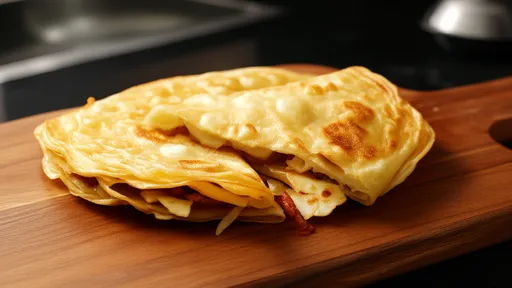
The humble jianbing guozi, a beloved Chinese street food, has long relied on its signature crispiness to win over breakfast crowds. At the heart of this savory crepe's texture lies the baocui - that impossibly thin, deep-fried cracker providing the satisfying crunch. But as home cooks seek to recreate this iconic snack, many are discovering an ingenious shortcut: using fried wonton wrappers as a substitute for traditional baocui.
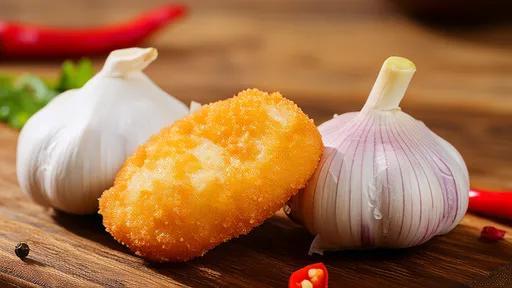
This culinary hack speaks to the creative spirit of modern home cooking, where authenticity meets accessibility. Wonton wrappers, those square sheets of wheat flour dough found in every Asian grocery store, transform remarkably well when subjected to hot oil. Their composition - simple unleavened dough made from flour, water, and salt - bears striking similarity to the dough used for proper baocui, just slightly thicker. When fried at the right temperature, they achieve that golden crispness without the labor-intensive process of hand-stretching ultra-thin dough.
The technique couldn't be simpler. Separate the stacked wonton wrappers carefully to prevent tearing. Heat vegetable or peanut oil to about 180°C (350°F) in a wok or deep pan. Test the oil's readiness by dipping a corner of one wrapper - it should immediately bubble vigorously. Slide in individual wrappers, frying for 20-30 seconds per side until they puff slightly and turn a light golden brown. Remove with a slotted spoon and drain on paper towels, where they'll continue crisping as they cool.
What makes this substitution particularly brilliant is its adaptability. For those preferring the lighter crisp of traditional baocui, fry the wrappers whole. Craving extra crunch? Stack two wrappers together with a light brush of water between them before frying - the resulting double-layer cracker delivers serious structural integrity that stands up to generous fillings. Some innovative cooks even cut the wrappers into strips or shapes before frying, creating textural variety within a single jianbing.
The flavor profile aligns remarkably well with authentic baocui. Properly fried wonton wrappers develop that same toasted wheat essence with subtle nutty undertones from the frying oil. Unlike some substitutes that require additional seasoning, these need nothing more than perhaps a light sprinkle of salt after frying. Their neutral taste makes them perfect vehicles for whatever sauces and fillings the jianbing contains, from hoisin to chili paste to scrambled eggs.
From a practical standpoint, the wonton wrapper approach solves several challenges facing home cooks. Traditional baocui-making requires specialized skills in dough preparation and frying - achieving that paper-thin consistency without holes demands practice most casual cooks lack. Wonton wrappers eliminate this hurdle entirely, offering consistent thickness and quality straight from the package. They're also shelf-stable when uncooked, meaning home chefs can keep a pack on hand for spontaneous jianbing cravings without worrying about fresh dough preparation.
Texture comparisons reveal interesting nuances. Authentic baocui tends to be slightly more delicate, shattering into feather-light shards with each bite. The wonton version offers a heartier crunch - still satisfyingly crisp, but with marginally more substance behind it. This actually benefits homemade jianbing, where structural integrity often suffers compared to street vendor versions. The slightly sturdier fried wonton wrapper helps prevent sogginess from moist fillings, especially important when wrapping isn't as tight as professionals achieve.
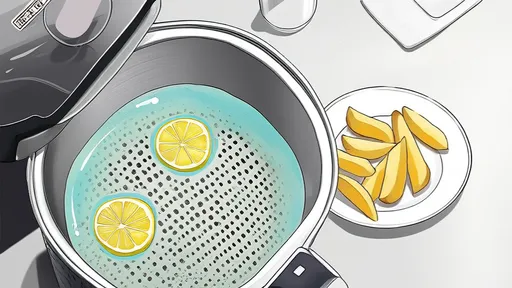
Nutritionally, the substitution makes little difference - both are fried wheat products, after all. However, the wonton wrapper method allows for better oil control. Commercial baocui often undergoes industrial-scale deep frying, while home cooks can manage oil freshness and quantity. Those watching fat intake can even try air-frying the wrappers, though this produces a different (but still pleasant) texture closer to crackers than traditional baocui's glass-like crispness.
This innovation reflects a broader trend in global home cooking: adapting professional techniques to domestic realities. Just as chefs might use specialized equipment to create certain textures, home cooks learn to improvise with available tools and ingredients. The wonton wrapper trick particularly resonates with urban cooks worldwide who appreciate jianbing's flavors but lack access to authentic components. It's culinary democratization at its tastiest - preserving the spirit of a dish while making it achievable in diverse kitchens.
Beyond jianbing, these fried wrappers show surprising versatility. Crumbled over noodles as a garnish, dipped in chocolate as an impromptu dessert, or served alongside soups for added texture - they've become a pantry staple for creative cooks. Some even use them as canapé bases or in place of crackers in cheese boards. This multifunctionality makes the initial purchase even more worthwhile, stretching a single package across multiple culinary applications.
Purists might argue that nothing truly replaces authentic baocui, and they're not wrong. There's an artistry to traditional jianbing components that mass-produced wrappers can't replicate. Yet in home kitchens where perfect authenticity takes backseat to delicious results, the wonton wrapper hack delivers where it counts. It captures that essential contrast between soft crepe and crispy element that defines great jianbing - perhaps the highest compliment any substitute can earn.
As Chinese street food gains global popularity, such adaptations will likely multiply. The wonton wrapper solution represents more than just a time-saver; it's a bridge between culinary traditions and modern cooking realities. For jianbing lovers outside China or anyone craving homemade versions, it offers a path to satisfying results without specialized ingredients. Sometimes the best kitchen innovations aren't about reinventing the wheel, but finding smarter ways to roll it forward.
By /Jul 31, 2025
By /Jul 31, 2025
By /Jul 31, 2025
By /Jul 31, 2025
By /Jul 31, 2025
By /Jul 31, 2025
By /Jul 31, 2025
By /Jul 31, 2025
By /Jul 31, 2025
By /Jul 31, 2025
By /Jul 31, 2025
By /Jul 31, 2025
By /Jul 31, 2025
By /Jul 31, 2025

By /Jul 31, 2025
By /Jul 31, 2025
By /Jul 31, 2025
By /Jul 31, 2025
By /Jul 31, 2025
By /Jul 31, 2025
