Nestled at the southernmost tip of South America, Ushuaia, Argentina, proudly bears the title of "the end of the world." This remote city, surrounded by the rugged peaks of the Andes and the icy waters of the Beagle Channel, has long been a bucket-list destination for intrepid travelers. While most come to embark on expeditions to Antarctica or trek through Tierra del Fuego National Park, a new and deeply personal experience is capturing the hearts of visitors: sending "slow mail" postcards from the world’s southernmost post office.
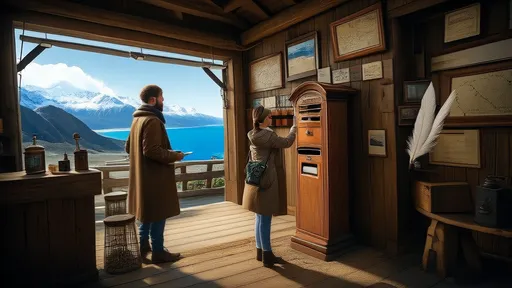
The iconic Post Office at the End of the World (Correo del Fin del Mundo) sits on the shores of the Beagle Channel, a quaint wooden hut that feels both timeless and profoundly symbolic. Unlike the instant gratification of digital communication, this post office offers something far more poetic—a tangible, delayed connection that bridges distances not just in space, but in time. Visitors can pen handwritten notes on vintage-style postcards, which are then stamped with a unique "End of the World" seal before beginning their slow journey across the globe.
What makes this experience so special is the intentional slowness. In an era dominated by emails and instant messaging, the act of writing a postcard by hand feels almost revolutionary. The cards often take weeks or even months to reach their destinations, meandering through postal systems and crossing oceans at their own unhurried pace. For recipients, receiving a postcard from Ushuaia is more than just mail—it’s a physical artifact of someone’s journey, a piece of the world’s edge carried to their doorstep.
The postcards themselves are works of art, featuring stunning landscapes of Patagonia, penguins waddling along icy shores, or the iconic red-and-white lighthouse that marks the southern极限. Many travelers use them as a way to send future messages to themselves, a practice known as "future mailing." Imagine opening your mailbox months after returning home to find a note from your past self, filled with reflections from the edge of the Earth. It’s a poignant reminder of the passage of time and the enduring power of handwritten words.
Beyond the postcards, the post office is a living museum of maritime history. The staff, often dressed in traditional postal uniforms, share stories of the explorers and sailors who once passed through these waters. The building itself is a replica of the original 19th-century post office established to serve the isolated communities of Tierra del Fuego. Stepping inside feels like stepping back in time, with the smell of aged wood and the sound of creaking floorboards adding to the atmosphere.
For those who make the pilgrimage to Ushuaia, sending a slow-mail postcard is more than a tourist activity—it’s a ritual. It’s a way to pause and reflect in a place that feels suspended between the known and the unknown. As the world becomes increasingly fast-paced and digital, the act of slowing down to write, stamp, and send a postcard from the end of the world is a small but meaningful rebellion. It’s a reminder that some connections are worth waiting for, and that the most enduring messages are those that travel not at the speed of light, but at the speed of life.
Whether you’re sending a note to a loved one or to your future self, the Post Office at the End of the World offers a rare opportunity to participate in a tradition that feels both ancient and urgently relevant. In a single postcard, you capture the essence of Ushuaia—the wild beauty, the sense of isolation, and the quiet magic of knowing you’ve stood where the world drops off into the unknown. And when that postcard finally arrives, months later, it brings with it a piece of that magic, a whisper from the edge of the Earth.

By /Aug 6, 2025
By /Aug 6, 2025
By /Aug 6, 2025

By /Aug 6, 2025

By /Aug 6, 2025
By /Aug 6, 2025

By /Aug 6, 2025
By /Aug 6, 2025
By /Aug 6, 2025
By /Aug 6, 2025
By /Aug 6, 2025
By /Aug 6, 2025
By /Aug 6, 2025
By /Aug 6, 2025
By /Aug 6, 2025
By /Aug 6, 2025
By /Aug 6, 2025
By /Aug 6, 2025
By /Aug 6, 2025
By /Aug 6, 2025
