The annual bear-watching season in Canada has long been a magnet for wildlife enthusiasts, but recent climatic shifts are quietly rewriting the rules of this natural spectacle. As temperatures creep upward, the traditional hotspots for spotting grizzlies and black bears are undergoing subtle transformations—while unexpected new locations are emerging as prime viewing territories. This ecological reshuffling presents both challenges and opportunities for tour operators and amateur naturalists alike.
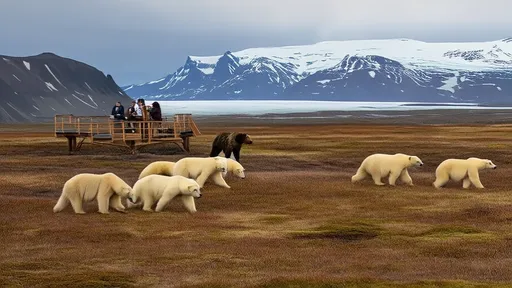
For decades, Churchill, Manitoba held the undisputed crown as Canada's bear-viewing capital, with its predictable polar bear migrations drawing thousands of visitors each autumn. Similarly, the salmon-rich streams of British Columbia's Great Bear Rainforest reliably delivered awe-inspiring grizzly encounters. But the warming climate has begun to alter feeding patterns, hibernation cycles, and territorial ranges in ways that are forcing wildlife professionals to constantly adapt their tracking strategies.
In northern Alberta, where boreal forest meets prairie, guides have noticed black bears emerging from hibernation nearly three weeks earlier than they did in the 1990s. This shift has created a peculiar overlap between late-season ski tourism and early-spring bear activity in areas like Jasper National Park. Meanwhile, coastal brown bears along the British Columbia shoreline are spending less time fattening up at traditional salmon spawning grounds, instead ranging farther inland in search of alternative food sources as stream temperatures rise.
The most dramatic changes appear in previously overlooked territories. The southern Yukon's Ruby Range, once considered marginal bear habitat, now supports a growing population of grizzlies venturing beyond their historical range. Wildlife biologists attribute this northward expansion to earlier snowmelt and longer growing seasons that allow bears to exploit alpine berry crops that previously ripened too late to be nutritionally worthwhile. Similarly, the Mackenzie Delta region near the Arctic coast has recorded unprecedented black bear sightings—animals that would have struggled to find adequate food in these latitudes just two decades ago.
Tour operators specializing in bear photography safaris have had to completely redesign their seasonal schedules and equipment lists. Where heavy winter gear once dominated packing lists for April expeditions, guides now recommend layered clothing suitable for temperatures that can swing from freezing to 15°C within hours. The more volatile weather patterns have also made transportation logistics trickier, with some remote lodges reporting shorter winter road access seasons even as bear activity periods lengthen.
Technology plays an increasingly crucial role in tracking these distribution changes. Satellite collar data analyzed by the University of Alberta's Wildlife Ecology Lab reveals that some grizzly bears now maintain territories 30% larger than their predecessors did in the 1980s, likely because they must cover more ground to locate reliable food sources. This expanded roaming behavior means that areas previously written off as poor bear habitat—such as the aspen parklands of central Saskatchewan—are suddenly producing remarkable viewing opportunities during late summer berry seasons.
Perhaps the most surprising development has been the emergence of reliable bear-watching near human settlements. The outskirts of Whitehorse, Yukon's capital, now regularly host black bears raiding apple trees in suburban backyards, while the edges of Prince George, British Columbia have become unexpected hotspots for observing grizzlies adapting to urban fringe environments. These encounters require careful management to prevent conflicts, but they've also created unique educational opportunities for residents and visitors alike.
The changing dynamics present both risks and rewards for Canada's bear tourism industry. Traditional viewing areas must now account for less predictable animal movements, requiring greater flexibility from visitors who can no longer guarantee sightings by simply showing up at the right time and place. Conversely, the expansion of viable bear habitat into new regions has allowed smaller communities to develop ecotourism initiatives that would have been unthinkable a generation ago.
Climate models suggest these trends will only intensify in coming decades. Researchers at the Canadian Wildlife Service predict that by 2050, suitable grizzly habitat could extend nearly 500 kilometers farther north than it did in the 20th century. This northward creep of ecosystems will likely continue reshaping Canada's bear-watching geography, creating both conservation challenges and novel wildlife viewing possibilities in equal measure.
For now, the most successful bear enthusiasts are those willing to embrace flexibility—tracking berry crop reports, studying up-to-date wildlife movement data, and maintaining willingness to venture off the beaten path. The bears themselves seem to be writing new chapters in their relationship with Canada's landscapes, and those hoping to witness these magnificent creatures must learn to read between the lines of a story that grows more complex with each passing season.

By /Aug 6, 2025

By /Aug 6, 2025
By /Aug 6, 2025

By /Aug 6, 2025
By /Aug 6, 2025
By /Aug 6, 2025
By /Aug 6, 2025
By /Aug 6, 2025

By /Aug 6, 2025
By /Aug 6, 2025

By /Aug 6, 2025

By /Aug 6, 2025
By /Aug 6, 2025
By /Aug 6, 2025

By /Aug 6, 2025
By /Aug 6, 2025

By /Aug 6, 2025

By /Aug 6, 2025

By /Aug 6, 2025
By /Aug 6, 2025
